Yho! Yho guys! Yho!
Okay I need to find my words and use them.
I have always had this book by Oyinkan Braithwaite but I hadn’t gotten around to reading it. Then a couple of nights ago, I was failing to fall asleep and I reached for it and… again yho! I read one page and before I knew it, it was 2 am and the book was finished. That alone gives it points. I like a book that I can binge read.
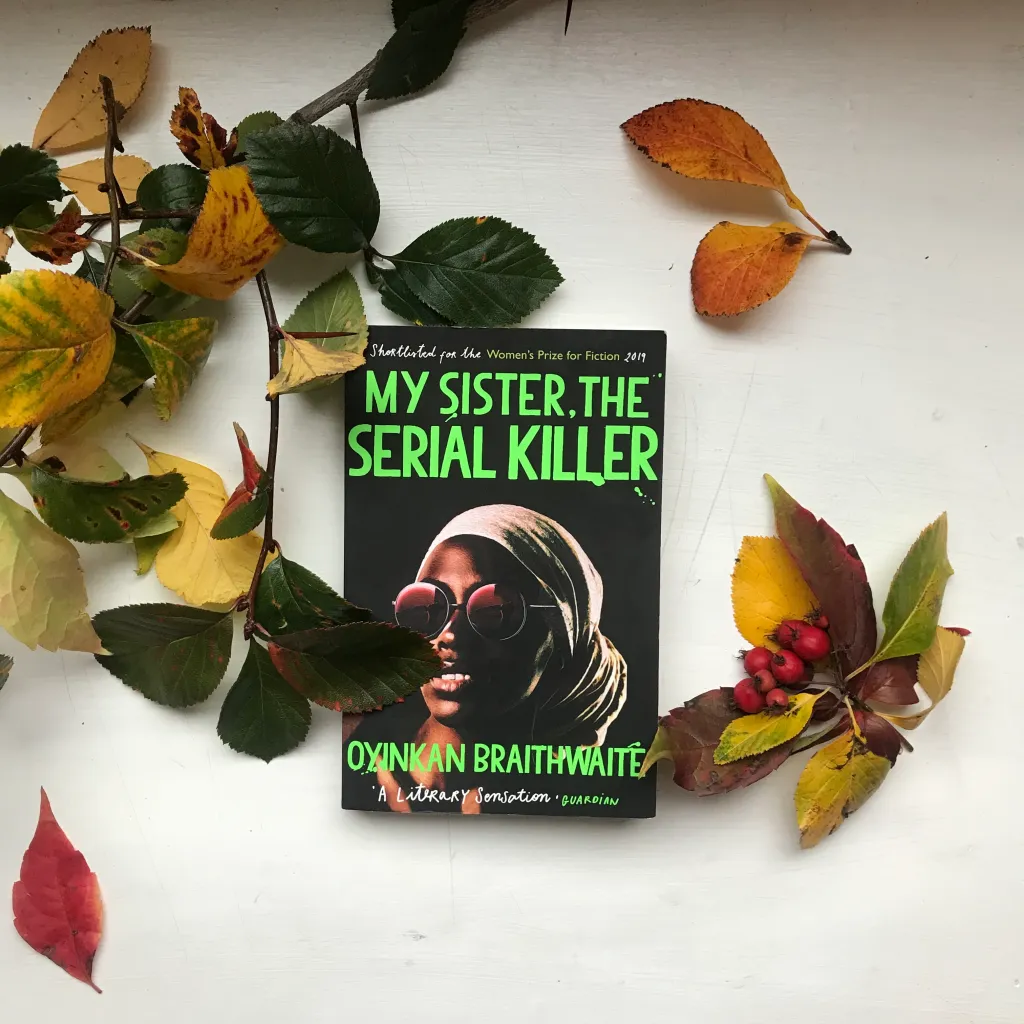
Source: Amina’s Bookshelf
I am not going to do a deep dive into the whole book, I believe that the title is pretty self explanatory. Neither will I do a full review; neither of us has that much time. I am just here to give an opinion that may not be very familiar. At the end of this book, I was sure of only one thing; Korede is the actual villain of this book.
Background, the book is about Korede, a young Nigerian nurse who is consistently cleaning up after her younger sister Ayoola who just can’t stop murdering the men she dates. This is about as much as I can share without spoiling it. Now, why would you call the dutiful big sister the villain in this very clear situation, you might ask? How much time do you have because, again yho!
1. Korede is one jealous B word
Listen I get it, it must be hard being the sibling that everyone overlooks. But for Korede it’s not just the sadness of being less prettier than her baby sister. She actually hates her for it. She takes jabs at Ayoola’s perfect face and perfect body any chance that she gets. And it’s not little haha big sister jabs, it’s actual resentment of her sister’s beauty. If I had a penny for any time Korede snidely mentions how pretty Ayoola is, I would be able to pay for my own wordpress domain. And it’s not jealousy that is kept between her and her reader. Nope, girl is so jealous of her sister that when the latter receives flowers from a suitor, Korede gets up in the middle of the night to shred and destroy said flowers. Who needs enemies when you have a sister like that?
2. Korede is an enabler
Tell me how your sister can call you three or four times telling you she just killed a dude and you show up EVERYTIME and clean up after her EVERYTIME. And she gives no consequences to her sister, no lecture no threat to call the police, nothing. She does not hold Ayoola accountable and then acts surprised when she keeps reverting to old habits. The only time she seems to have a problem with Ayoola’s …uhmm habit is when she realises that her next victim is someone she cares about. So her issue with murder at this point is not that it’s morally, ethically or legally wrong, nope. It’s just “you can kill anyone but not the guy I like” Girl, what?
3. Korede is hateful
I don’t know if this should be blamed on her parents or on society or…but my girl just carries so much hate. For everyone and everything! She understandably hated her father. She silently hates her mother for reasons that I don’t fully understand. Sure, her mother is a bit eccentric, but a little empathy for the woman, and to be fair, what African mum isn’t just a little overbearing? But you don’t hear us calling our mothers ugly. Korede’s hatred even transfers to people who don’t deserve it. She hates her co-workers and is even disdainful of the doctor who gives her a promotion. Kubuhlungu ngaphi sisi sikuncede.
4. Korede has “good guy” syndrome
We all know one. That one guy who believes he is a good guy and then thinks the world should reward him for being good. Newsflash! You are supposed to be good. That’s how Korede comes across; like she wants us to clap and throw a parade simply because she is a good person. Except she is not. Not really. Korede seems to think that because she is not a bad person, she automatically defaults to being a good person. Sure, she does not kill people but come on; she is rude, unkind, impatient, jealous… kuningi ngo girl. And she seems so unaware of it.
5. Korede is a snob
Korede is a classist snob. She can remember things; all of Ayoola’s boyfriends names, her patients’ family member’s names but she cannot remember her helper’s name? I have not heard someone use the word “house girl” in years yet Korede throws around that word a hundred times. Maybe I am too sensitive to the word but that helper is the only person in the entire book that treats Korede with respect. She treats her the same way she treats Ayoola and gets nothing in return from Korede. She could have bothered to use her name-at least once. I really don’t understand Korede’s issue with the helper. She addresses the help staff at her work by their names but she can’t do the same for someone who cleans up after her and makes her meals.
6. Korede is a snitch
If I worked with Korede, I would absolutely hate her. She is that co-worker that is always waiting to reprimand you. Yet, we are at work guys, we are all adults here, we all know what is expected of us. Why must you be a prefect at work? She is always up in her co-workers business and I get you are the supervisor but government workers are generally overworked and underpaid and as long as the work is done, who cares which co-worker is sleeping with which one and who cares if a nurse gets a little nap in between patients?
7. Korede has no personality
In the beginning, I was willing to understand Korede,I was ready to get to know her and sympathise with her. Then I realised there was nothing beneath her surface. Absolutely nothing. Korede has no personality, her whole identity is that she is not pretty. She has taken this thing that she does not like about herself and made it her whole world. All the while she ignores the fact that she has zero personality; no humour, no interests, no known values, no traceable emotional patterns. I guarantee even if she had Ayoola’s face, she would still be the very same person in the very same position.
There is just so much to dislike about Korede. Usually when writing is in first person, you almost naturally gravitate towards the narrator because they have trusted you and invited you into their world. But with Korede, it felt different. I would not have a cup of coffee with her, I would not hang out with her , I would not even want to work with her. In as much as her story is quite tragic and she deserves sympathy, Korede is a willing curator of her own misery and the resentment she holds towards Ayoola makes me wonder if she is even a reliable narrator. Could she be so jealous as to make up elaborate lies about her sister?
In all of this, I do not want to rule out the elephant in the room. There is obviously a mental illness gene within this family- quite possibly passed down from their father, the only difference is in how it manifests itself. (I am about to draw conclusions based on my limited Psychology knowledge and a few google searches) In the father, it manifested as Narcissistic Personality Disorder( the pomp, the self-importance, the unprovoked lying, the rage and temper, the physical abuse, the gaslighting), in Ayoola it presents as what I may call Sociopathy or the more PC term Antisocial Personality Disorder (the murder, the lack of remorse, the manipulation and the ability to mimick normal human behaviour and get away with it). Korede’s case is a lot more subtle but there is something there, the Obsessive Compulsive Disorder is the most obvious but her codependence with Ayoola must also not be ignored. Again my appreciation of Psychology is limited but I would be interested to hear what a professional thinks about this.
Another sad generational pattern emerges here. Korede does not want to be her mother, however she becomes something far worse. I feel compelled to stress that Korede has grown into her aunt-the one woman she despises more than she despises her mother. Obviously Korede cannot see it herself but as she grows older and as entangles herself more and more in her sister’s life with none of her own, she has sadly become the woman she despised and once defended her sister against.
So maybe I am a little hard on Korede. Maybe she simply represents the burden carried by the first born daughter in an African household. But also at some point, we are all responsible for our own choices and our being. At some point you have to stop blaming mummy, daddy, baby sister and the economy for all your faults. At some point, your issues become just that-your issues!